Total Pageviews

Friday, August 20, 2021

Weather ~ Picture of the Day ~ Interesting About Henry Ford ~ Deep Dish Pizza Casserole ~ National Radio Day


Good 52º scattered clouds morning. 
 
Yesterday we got clear blue sky and some fluffy white clouds. We topped at 98º.
 
 
Picture of the Day.... then and now, Tippi 91
 

Tippi Hedren got her start as a model before being discovered by Alfred Hitchcock and being cast in The Birds in 1963. Since then she’s appeared in more than 80 movies and TV shows, with her most recent projects being in the TV show Cougar Town in 2013, and the movie The Ghost and the Whale in 2017.


Interesting about Henry Ford....
 

Henry Ford (July 30, 1863 – April 7, 1947) was an American industrialist, business magnate, and founder of the Ford Motor Company, and chief developer of the assembly line technique of mass production. By creating the first automobile that middle-class Americans could afford, he converted the automobile from an expensive curiosity into an accessible conveyance that profoundly impacted the landscape of the 20th century.


His introduction of the Ford Model T automobile revolutionized transportation and American industry. As the Ford Motor Company owner, he became one of the richest and best-known people in the world. He is credited with "Fordism": mass production of inexpensive goods coupled with high wages for workers. Ford had a global vision, with consumerism as the key to peace. His intense commitment to systematically lowering costs resulted in many technical and business innovations, including a franchise system that put dealerships throughout North America and major cities on six continents. Ford left most of his vast wealth to the Ford Foundation and arranged for his family to permanently control it.


Henry Ford was born July 30, 1863, on a farm in Springwells Township, Michigan. His father, William Ford (1826–1905), was born in County Cork, Ireland, to a family that had emigrated from Somerset, England in the 16th century. His mother, Mary Ford (née Litogot; 1839–1876), was born in Michigan as the youngest child of Belgian immigrants; her parents died when she was a child and she was adopted by neighbors, the O'Herns. Henry Ford's siblings were Margaret Ford (1867–1938); Jane Ford (c. 1868–1945); William Ford (1871–1917) and Robert Ford (1873–1934).


His father gave him a pocket watch in his early teens. At 15, Ford dismantled and reassembled the timepieces of friends and neighbors dozens of times, gaining the reputation of a watch repairman.


In 1891, Ford became an engineer with the Edison Illuminating Company of Detroit. After his promotion to Chief Engineer in 1893, he had enough time and money to devote attention to his experiments on gasoline engines. These experiments culminated in 1896 with the completion of a self-propelled vehicle, which he named the Ford Quadricycle. He test-drove it on June 4. After various test drives, Ford brainstormed ways to improve the Quadricycle.


The Model T debuted on October 1, 1908.


It had the steering wheel on the left, which every other company soon copied. The entire engine and transmission were enclosed; the four cylinders were cast in a solid block; the suspension used two semi-elliptic springs. The car was very simple to drive, and easy and cheap to repair. It was so cheap at $825 in 1908 ($23,760 today), with the price falling every year, that by the 1920s, a majority of American drivers had learned to drive on the Model T, despite the fact that drivers who were only familiar with the Model T's unique foot-operated planetary transmission and steering-column operated throttle-cum-accelerator had to learn a completely different set of skills to drive any other gasoline-powered automobile of the time.


Ford was interested in engineered woods ("Better wood can be made than is grown") (at this time plywood and particle board were little more than experimental ideas); corn as a fuel source, via both corn oil and ethanol; and the potential uses of cotton. Ford was instrumental in developing charcoal briquets, under the brand name "Kingsford". His brother-in-law, E.G. Kingsford, used wood scraps from the Ford factory to make the briquets.


If you are interested in reading a lot more about Henry Ford, go here:

https://en.wikipedia.org/wiki/Henry_Ford


From Mr. Food


Looking for a budget friendly, fast, and delicious way to eat? Our Deep Dish Pizza Casserole is just what you need! This easy deep dish pizza is ready in just 30 minutes, and is sure to please the kids with its cheesy pizza goodness. You'll give the flavors and simplicity of this dish an A+!


  • 1 pound ground beef
  • 1 1/2 cups spaghetti sauce
  • 1 teaspoon Italian seasoning
  • 1 cup frozen bell peppers and onions, thawed and drained
  • 1 (10-ounce) can refrigerated pizza dough
  • 12 slices mozzarella cheese, divided
  • 1/4 cup grated Parmesan cheese
  1. Preheat oven to 425º. Coat a 9- x 13-inch baking dish with cooking spray.
  2. In a medium nonstick skillet over medium-high heat, brown beef, stirring until meat crumbles and is no longer pink. Drain off pan drippings. Stir in spaghetti sauce, Italian seasoning, and onion and pepper mixture and cook until heated through.
  3. Meanwhile, unroll pizza dough and press into bottom and halfway up sides of baking dish (see Notes). Line pizza dough with 6 slices of mozzarella cheese. Top with meat mixture. Place remaining 6 slices of cheese over meat filling and sprinkle with Parmesan cheese.
  4. Bake 20 to 25 minutes or until crust is golden and cheese begins to bubble up. Cool 5 minutes before cutting into squares and serving.


***Make sure to push the pizza crust up the sides of your baking dish so the delicious pizza filling will bubble up inside the crispy crust. And if you like your pizza with more toppings, add pepperoni or crumbled, cooked sausage for extra taste!
 
 
Historically this date....
1910 – The Great Fire of 1910 (also commonly referred to as the Big Blowup or the Big Burn) occurred in northeast Washington, northern Idaho (the panhandle), and western Montana, burning approximately 3 million acres.
 
1920 – The first commercial radio station, 8MK (now WWJ), begins operations in Detroit, Michigan.
 
1920 – The National Football League, (NFL), is founded in the United States.
 
 
1938 – Lou Gehrig hits his 23rd career grand slam – a record that still stands.
 
1986 – In Edmond, Oklahoma, U.S. Postal employee Patrick Sherrill guns down 14 of his co-workers and then commits suicide.
..... from that came the term, "going postal" !


And births this date include...


1931 – Don King, American boxing promoter
https://blogger.googleusercontent.com/img/b/R29vZ2xl/AVvXsEhcPYGy0WzgRppn_W64gr3yzH8oDjmovgd9nh93duMyVTyzlvSdwQyj7qUcwS8vTATXD7a9F1bVm5fpZGbchd6uc9vPxEnRSDg8qVtwl_NrpgiaSGRgGfi-DndRVPki6v8zBsHu6uif87aq/s1600/kingMA28840507-0023.jpg


https://blogger.googleusercontent.com/img/b/R29vZ2xl/AVvXsEhay7VgHhpidBGna7515cl98qIMd9-yACPD7fnBo2uKYCwBj_DFIM81Pfia0bX3wsqBVho0JGvoTkEUl5WL1ZGAeTX7UGcVk6DEKftf89XX6N3sS6i99zdT68LC01jVoY9RlAlLwVSUURXs/s1600/rpMA28840507-0024.jpg


1954 – Al Roker, American television personality
https://blogger.googleusercontent.com/img/b/R29vZ2xl/AVvXsEjqEgw3oINj3tl4nm8CTpZes2NDdm2-mA5l1TjCSsOe79PwNDTrdKRnEPLeGs5SxGKi6TY9p8jhJueZ43pGuxJdiKZjCfBxhKZGsyelNX20IRy7azg6qCXgh8dRZZhffH5tgW0MpqezBYoX/s1600/arMA28840507-0025.jpg


He once said he had traveled around the country to all the fairs and the best one he went to was the LA Co Fair in Pomona!  Jerry and I thought so too! Never missed one.


All I know. Nuff said. Have a good Friday. Ciao.
xo Sue Mom Bobo

Each year on August 20th, National Radio Day recognizes the great invention of the radio. Celebrate the news, information, music, and stories carried across the airwaves.
Several inventors had a part in the invention of the radio in the late 1800s. Amazingly, not just one person can be credited with its beginning. Instead, each component developed through invention and discovery. As these technologies converged, the radio came to life.
THE CONTRIBUTORS
In the paragraphs that follow, a noted international effort contributed to the conception of the radio. In Germany, Heinrich Hertz’s research proved electricity could be transmitted wirelessly. Elsewhere, the prolific inventor patented multiple inventions and provided the radio with the Tesla coil. Born in Croatia, Tesla also contributed many patents involving alternating current. Not only did Tesla make the radio possible, but he also advanced the science and production of numerous other inventions. However, when it comes to the first commercially available wireless, Italian, Guglielmo Marconi receives the honor. 
Entertainment and music didn’t always fill the airwaves. In fact, the radio’s first function was much more practical. First, the wireless radio served the military. The radio also provided a regular public service role. Much like the dits and dots of a telegram, the wireless transmitted information. Aboard the Titanic at the time of its sinking, a Marconi wireless broadcast the ship’s distress signal. In 1906, the first radio broadcast of voice and music purely for entertainment purposes aired. Reginald Fessenden transmitted the program from Brant Rock, MA for the general public to hear. The Canadian born scientist would go on to many more successes in his lifetime. 
An American contributor to the radio, Lee de Forest invented the Audion vacuum. This invention made live broadcasting possible. Born in Iowa in 1873, de Forest would become the chief scientist for the first U.S. radio firm, American Wireless Telephone, and Telegraph.   
BROADCASTS
The 1920s brought the first broadcast stations to the forefront. Around the world, listeners tuned in for news and world events for the first time. Other radio facts include:
  • Radio ownership grew. In 1931, two out of five homes owned a radio. By 1938, four out of five owned a radio.  
  • According to FCC statistics, at the end of 2012, more than 15,000 licensed broadcast radio stations were operating in the U.S.
  • On October 1, 1999, the first satellite radio broadcast occurred. Worldspace aired the broadcast in Africa.

Thursday, August 19, 2021

Weather ~ Picture of the Day ~ Corkscrew History ~ Apple Cinnamon Rolls ~ Patty Kuehl ~ National Aviation Day


Good 49º cloudy morning. 
 
Yesterday we topped at 89º.
 
 
Picture of the Day... perfect timing....


Interesting about corkscrews....
 

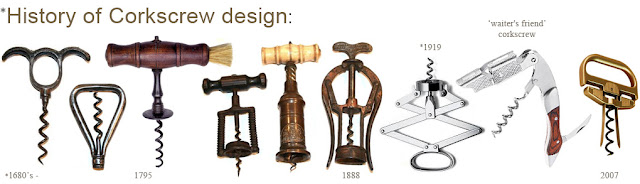
A corkscrew is a tool for drawing corks from wine bottles and other household bottles that may be sealed with corks. In its traditional form, a corkscrew simply consists of a pointed metallic helix (often called the "worm") attached to a handle, which the user screws into the cork and pulls to extract it. Corkscrews are necessary because corks themselves, being small and smooth, are difficult to grip and remove, particularly when inserted fully into an inflexible glass bottle. More recent styles of corkscrew incorporate various systems of levers that further increase the amount of force that can be applied outwards upon the cork, making easier the extraction of difficult corks.

The corkscrew is possibly an English invention, due to the tradition of beer and cider, and Treatise on Cider by John Worlidge in 1676 describes "binning of tightly corked cider bottles on their sides", although the earliest reference to a corkscrew is, "steel worm used for the drawing of Corks out of Bottles" from 1681.


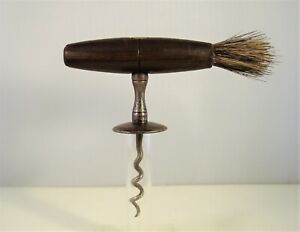
In 1795, the first corkscrew patent was granted to the Reverend Samuell Henshall, in England.


The clergyman affixed a simple disk, now known as the Henshall Button, between the worm and the shank. The disk prevents the worm from going too deep into the cork, forces the cork to turn with the turning of the crosspiece, and thus breaks the adhesion between the cork and the neck of the bottle.


From Mr. Food


 Our Apple Cinnamon Rolls make are such a treat, especially when alongside a glass of warm apple cider.


  • 1/2 teaspoon ground cinnamon
  • 1/4 cup sugar
  • 1 (8-ounce) can refrigerated crescent rolls
  • 2 large apples (Granny Smith or any other firm, tart apple), peeled, cored, and each cut into 8 wedges
  • 2 tablespoons butter, melted
  • 1/4 cup orange juice or water


  1. Preheat oven to 375º. In a small bowl, mix cinnamon and sugar together; set aside.
  2. Unroll crescent roll dough; separate into 8 triangles. Cut each in half lengthwise to make 16 triangular strips. Place an apple wedge on wide end of each strip; roll up.
  3. Arrange rolls in a 9- x 13-inch glass baking dish. Drizzle with melted butter; sprinkle with cinnamon-sugar mixture. Pour orange juice or water into baking dish, but not over rolls.
  4. Bake 30 to 35 minutes, or until rolls are golden brown and apple wedges are tender.


Super special birthday today.... dear friend Patty Kuehl is celebrating birthday #88. HAPPY BIRTHDAY PATTY. Since you moved to the coast, I miss you so much!! Hope you have a GREAT day. xoxoox's
 
 
Historically this date....
1895 – American Frontier murderer and outlaw, John Wesley Hardin, is killed by an off-duty policeman in a saloon in El Paso, Texas.
 
1944 – World War II: Liberation of Paris – Paris, France rises against German occupation with the help of Allied troops.
 
1953 – Cold War: The CIA and MI6 help to overthrow the government of Mohammad Mosaddegh in Iran and reinstate the Shah Mohammad Reza Pahlavi
 
1989 – Several hundred East Germans cross the frontier between Hungary and Austria during the Pan-European Picnic, part of the events which began the process of the Fall of the Berlin Wall.
 
2010 – Operation Iraqi Freedom ends, with the last of the United States brigade combat teams crossing the border to Kuwait.


And births this date include.....
1871 – Orville Wright, American engineer and pilot, co-founded the Wright Company (d. 1948)


1931 – Willie Shoemaker, American jockey (d. 2003)
https://blogger.googleusercontent.com/img/b/R29vZ2xl/AVvXsEiKeoEO0JX8Aw4I8wKDZ_JBDEJf56hw2arxGX4Ww3PxErVJO8yCLknwug2Qacop8_07X9U0Mz22UqMtxuFfLHdtHxowo_BWqvPWcvyygv63lljgcZD9JV9Z27PvQe-BicaP6Jq2QkR_rGx_/s1600/willieMA29054112-0016.jpghttps://blogger.googleusercontent.com/img/b/R29vZ2xl/AVvXsEitMuaQd4EP8yw9ghdjQSBIN2iE1Go4RkWsUM2VyKreoox8eeTNCvDvOVyfWKHbm3ihrAkZzC9grgwhuQpv7R2uDiWf431aruwB1dhf5A1NenLsSceMW0zwyvJ6KZyyUzW5Ke0NeM3L184s/s1600/willieandwiltMA29054112-0017.jpg
LOL, Willie and Wilt~!
Willie lived on Baldwin Avenue in Arcadia, across from the Santa Anita Race Track. He had a wife, tall blonde, that looked as tall as Wilt when she stood next to Willie!


1940 – Jill St. John, American actress
 
https://blogger.googleusercontent.com/img/b/R29vZ2xl/AVvXsEh9MRjukr5KQTFYjNasKeE7kTnZ88kajUzMpqkoYxLafVI9pQmsT6PVMstqlFXHwf2OmKnys27xQJA4HT7iU4EE4crwRJkEUOkJGekTSz4guSV2mB_jdxyoTCdIqFDA3Y-BkWqIuxfp0rG8/s1600/jillMA29054112-0018.jpg
 
 
.....😒
https://blogger.googleusercontent.com/img/b/R29vZ2xl/AVvXsEiQJXLcq4mUp9CNONcA7JVu8NjrL_ipc8T0qyWD4hn6tVTIBKZbG9f8tb8YMShzfDzA8epCDfQKkR4Cv-6Ut6mcNHCOnUj_4VeZKsicg9OB4gpogIcgAej1UYa0XJIX54PSF2OJGinZ38Z2/s1600/jerkMA29054112-0019.jpg


1948 – Gerald McRaney, American actor
https://blogger.googleusercontent.com/img/b/R29vZ2xl/AVvXsEggDTs33kbX5myR2buZlCDaUunSkf2YXHfey9oOKvmc6VJ9L3H5ToTgX1MtDJF2_xSgSwbJL6EdQS6kcV5053aWAP-OMw52_X4mhEBqXHxshzEpzUsrbK49VWBEwX6Xgm7-4PkY_-6KpL1f/s1600/geraldMA29054112-0020.jpghttps://blogger.googleusercontent.com/img/b/R29vZ2xl/AVvXsEgh1TDk4fdEl7-KWxlzeUP0xsHnu6nsR6MIgzas0ErOaRjDkd1YKuT0D-jccoybbN8-QZ622YgdPpgpVM0NoEwRKtPpgt8lKKrRE_yNMMM2XudsXdczClCevjwYvpWefhcXL11sByp5Xlab/s1600/geralddeltaMA29054112-0021.jpg


1963 – John Stamos, American actor
https://blogger.googleusercontent.com/img/b/R29vZ2xl/AVvXsEhQAKk4vdLID7XXk-abstf4MFLaBytU_wuvjhfbuedb6K2jC7eFoH1Wca_c_KFKxpn_6v3VqhCmHqWLFozZYfbWi7ve7A6fdWVRBo_31g2ijr3HqsDUyj9LcgorvXrS131w0L1d7kySx5Ua/s1600/john1MA29054112-0023.jpghttps://blogger.googleusercontent.com/img/b/R29vZ2xl/AVvXsEjTN3nIyNGQMr-vV5VdJn4vBxKCWxu0XOfN2LyzlqB_OWhHgt5yWb6jY3pPrfq1nb6pLcs-a1WryxINd4OfdwY8JQ9n0OQ1c0uhr6EbYDRwwuMEMJcNNyzhvmc7Hr1Jp-atf04kBRRSj2Fi/s1600/johnMA29054112-0024.jpg
 
 
1965 – Kyra Sedgwick, American actress
 
https://blogger.googleusercontent.com/img/b/R29vZ2xl/AVvXsEh_R6c0DiUNnpsGspReS7t0d8FplS7Ye28kX99t5G821kMQAYgROjSrrLKDMKoFbu0HlozB63SSPUWrQmFjjGTXPO0abEQZLNEU31JlAbN7cBLLAglW6wk_kMQrOReHCyRoLVqTgVMjQpA1/s1600/kyraMA29054112-0025.jpghttps://blogger.googleusercontent.com/img/b/R29vZ2xl/AVvXsEiRRoFP_K0FfddNztmtRGeBio_RoFqoAFRY5PLDy_8-Sb2xFI_hAeWOW2hvPEFIc80rJgFoiolY9sk8Y-exAd_eMn_Cpc9iKqcyEdrOqjLuqvPS3bbT124KMxeYJLj5IHDqi4RJT42RNrOi/s1600/kyrakevinMA29054112-0026.jpg
 
 
1969 – Matthew Perry, American actor
... here we go again, can't afford a comb?
https://blogger.googleusercontent.com/img/b/R29vZ2xl/AVvXsEjy8LjPxVpJUuyXv0QsOTXyv-QrCiOsBwWAhFKdK4j0sZ0a3bhbH2ZDOTKMz9uDE_VmbRsKUprAJE_HRyPtcdhzWGYe0JkRODLa-jr-EHo0lI3qQlridN39vmpxC-Lf9mvFWkPelIGFSs60/s1600/matthewMA29054112-0027.jpg


All I know. Nuff said. Have a good Thursday. Ciao.
xo Sue Mom Bobo

National Aviation Day on August 19th recognizes the pioneers of human flight. 
For centuries, humans have been fascinated by flight. In ancient China, kites few to investigate the weather. Inventors such as Leonardo da Vinci developed many ideas about flight, too. Gliders and balloons lifted humans into the sky, but none of the inventions gave a person control of where they flew.
Before Powered Flight
The physics of flight and propulsion play key roles in who became pioneers. George Cayley used aerodynamics while designing fixed-wing aircraft. His designs would later inspire Orville and Wilbur Wright.
Since propulsion is one of the primary requirements to lift a human into the sky for flight, it would make sense that an engine could provide that power. Samuel Langley, an astronomer from Boston, designed a steam-powered model called an aerodrome in 1891. It flew for 3/4ths of a mile.
After receiving a grant to build a full-sized aerodrome, Langley’s first test crashed. He never made another attempt.
First Powered Flight
In a bicycle shop in Dayton, Ohio, two inventors eagerly began testing their ideas about flight. Brothers, Orville and Wilbur Wright, had studied Octave Chanute’s 1894 Progress in Flying Machines. The brothers set to work testing their designs, first with gliders. Eventually, they sought to add an engine.
Two American inventors and aviation pioneers, the Wright brothers are credited with inventing and building the world’s first successful airplane and making the first controlled powered and sustained heavier-than-air human flight on December 17, 1903.
In 1902, Charles Edward Taylor joined their team in pursuit of powered flight. Since automobile companies couldn’t supply an engine light enough and powerful enough, they would have to build it. Taylor, a machinist, set to work building the 12-horsepower engine. It took Taylor 6 weeks to build the engine.
After completing the design in September of 1903, the Wrights returned to Kitty Hawk, North Carolina. Just months before, they had successfully tested their glider. However, setbacks and weather postponed the powered flight.
It wasn’t until mid-December that the brothers finally felt all was in order. After flipping a coin to decide who would pilot the machine, Wilbur climbed aboard. The first attempt failed, only flying 3.5 seconds. However, the brothers learned what worked.
The next attempt on December 17, 1903, Orville took the controls. After launching, the machine flew for 120 feet. Man flew.
Since that day, aviation exploded into the skies. Its applications became immediately apparent to the military. The Wrights consulted with the Army for several years after their success.
Now that humans could fly, they set new challenges – flying across oceans, around the world, and into space.


NATIONAL AVIATION DAY HISTORY

In 1939, President Franklin Delano Roosevelt established National Aviation Day by presidential proclamation designating the anniversary of Orville Wright’s birthday for the observance. Born August 19, 1871, Orville Wright was still living when President Roosevelt issued the proclamation. Orville Wright continued living for nine more years until his death in 1948.