Total Pageviews

Thursday, August 19, 2021

Weather ~ Picture of the Day ~ Corkscrew History ~ Apple Cinnamon Rolls ~ Patty Kuehl ~ National Aviation Day


Good 49º cloudy morning. 
 
Yesterday we topped at 89º.
 
 
Picture of the Day... perfect timing....


Interesting about corkscrews....
 

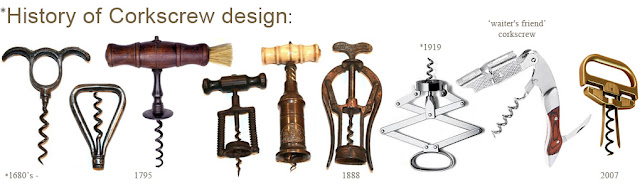
A corkscrew is a tool for drawing corks from wine bottles and other household bottles that may be sealed with corks. In its traditional form, a corkscrew simply consists of a pointed metallic helix (often called the "worm") attached to a handle, which the user screws into the cork and pulls to extract it. Corkscrews are necessary because corks themselves, being small and smooth, are difficult to grip and remove, particularly when inserted fully into an inflexible glass bottle. More recent styles of corkscrew incorporate various systems of levers that further increase the amount of force that can be applied outwards upon the cork, making easier the extraction of difficult corks.

The corkscrew is possibly an English invention, due to the tradition of beer and cider, and Treatise on Cider by John Worlidge in 1676 describes "binning of tightly corked cider bottles on their sides", although the earliest reference to a corkscrew is, "steel worm used for the drawing of Corks out of Bottles" from 1681.


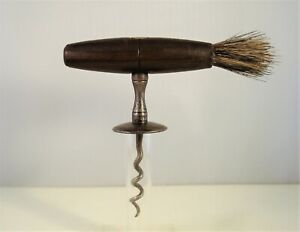
In 1795, the first corkscrew patent was granted to the Reverend Samuell Henshall, in England.


The clergyman affixed a simple disk, now known as the Henshall Button, between the worm and the shank. The disk prevents the worm from going too deep into the cork, forces the cork to turn with the turning of the crosspiece, and thus breaks the adhesion between the cork and the neck of the bottle.


From Mr. Food


 Our Apple Cinnamon Rolls make are such a treat, especially when alongside a glass of warm apple cider.


  • 1/2 teaspoon ground cinnamon
  • 1/4 cup sugar
  • 1 (8-ounce) can refrigerated crescent rolls
  • 2 large apples (Granny Smith or any other firm, tart apple), peeled, cored, and each cut into 8 wedges
  • 2 tablespoons butter, melted
  • 1/4 cup orange juice or water


  1. Preheat oven to 375º. In a small bowl, mix cinnamon and sugar together; set aside.
  2. Unroll crescent roll dough; separate into 8 triangles. Cut each in half lengthwise to make 16 triangular strips. Place an apple wedge on wide end of each strip; roll up.
  3. Arrange rolls in a 9- x 13-inch glass baking dish. Drizzle with melted butter; sprinkle with cinnamon-sugar mixture. Pour orange juice or water into baking dish, but not over rolls.
  4. Bake 30 to 35 minutes, or until rolls are golden brown and apple wedges are tender.


Super special birthday today.... dear friend Patty Kuehl is celebrating birthday #88. HAPPY BIRTHDAY PATTY. Since you moved to the coast, I miss you so much!! Hope you have a GREAT day. xoxoox's
 
 
Historically this date....
1895 – American Frontier murderer and outlaw, John Wesley Hardin, is killed by an off-duty policeman in a saloon in El Paso, Texas.
 
1944 – World War II: Liberation of Paris – Paris, France rises against German occupation with the help of Allied troops.
 
1953 – Cold War: The CIA and MI6 help to overthrow the government of Mohammad Mosaddegh in Iran and reinstate the Shah Mohammad Reza Pahlavi
 
1989 – Several hundred East Germans cross the frontier between Hungary and Austria during the Pan-European Picnic, part of the events which began the process of the Fall of the Berlin Wall.
 
2010 – Operation Iraqi Freedom ends, with the last of the United States brigade combat teams crossing the border to Kuwait.


And births this date include.....
1871 – Orville Wright, American engineer and pilot, co-founded the Wright Company (d. 1948)


1931 – Willie Shoemaker, American jockey (d. 2003)
https://blogger.googleusercontent.com/img/b/R29vZ2xl/AVvXsEiKeoEO0JX8Aw4I8wKDZ_JBDEJf56hw2arxGX4Ww3PxErVJO8yCLknwug2Qacop8_07X9U0Mz22UqMtxuFfLHdtHxowo_BWqvPWcvyygv63lljgcZD9JV9Z27PvQe-BicaP6Jq2QkR_rGx_/s1600/willieMA29054112-0016.jpghttps://blogger.googleusercontent.com/img/b/R29vZ2xl/AVvXsEitMuaQd4EP8yw9ghdjQSBIN2iE1Go4RkWsUM2VyKreoox8eeTNCvDvOVyfWKHbm3ihrAkZzC9grgwhuQpv7R2uDiWf431aruwB1dhf5A1NenLsSceMW0zwyvJ6KZyyUzW5Ke0NeM3L184s/s1600/willieandwiltMA29054112-0017.jpg
LOL, Willie and Wilt~!
Willie lived on Baldwin Avenue in Arcadia, across from the Santa Anita Race Track. He had a wife, tall blonde, that looked as tall as Wilt when she stood next to Willie!


1940 – Jill St. John, American actress
 
https://blogger.googleusercontent.com/img/b/R29vZ2xl/AVvXsEh9MRjukr5KQTFYjNasKeE7kTnZ88kajUzMpqkoYxLafVI9pQmsT6PVMstqlFXHwf2OmKnys27xQJA4HT7iU4EE4crwRJkEUOkJGekTSz4guSV2mB_jdxyoTCdIqFDA3Y-BkWqIuxfp0rG8/s1600/jillMA29054112-0018.jpg
 
 
.....😒
https://blogger.googleusercontent.com/img/b/R29vZ2xl/AVvXsEiQJXLcq4mUp9CNONcA7JVu8NjrL_ipc8T0qyWD4hn6tVTIBKZbG9f8tb8YMShzfDzA8epCDfQKkR4Cv-6Ut6mcNHCOnUj_4VeZKsicg9OB4gpogIcgAej1UYa0XJIX54PSF2OJGinZ38Z2/s1600/jerkMA29054112-0019.jpg


1948 – Gerald McRaney, American actor
https://blogger.googleusercontent.com/img/b/R29vZ2xl/AVvXsEggDTs33kbX5myR2buZlCDaUunSkf2YXHfey9oOKvmc6VJ9L3H5ToTgX1MtDJF2_xSgSwbJL6EdQS6kcV5053aWAP-OMw52_X4mhEBqXHxshzEpzUsrbK49VWBEwX6Xgm7-4PkY_-6KpL1f/s1600/geraldMA29054112-0020.jpghttps://blogger.googleusercontent.com/img/b/R29vZ2xl/AVvXsEgh1TDk4fdEl7-KWxlzeUP0xsHnu6nsR6MIgzas0ErOaRjDkd1YKuT0D-jccoybbN8-QZ622YgdPpgpVM0NoEwRKtPpgt8lKKrRE_yNMMM2XudsXdczClCevjwYvpWefhcXL11sByp5Xlab/s1600/geralddeltaMA29054112-0021.jpg


1963 – John Stamos, American actor
https://blogger.googleusercontent.com/img/b/R29vZ2xl/AVvXsEhQAKk4vdLID7XXk-abstf4MFLaBytU_wuvjhfbuedb6K2jC7eFoH1Wca_c_KFKxpn_6v3VqhCmHqWLFozZYfbWi7ve7A6fdWVRBo_31g2ijr3HqsDUyj9LcgorvXrS131w0L1d7kySx5Ua/s1600/john1MA29054112-0023.jpghttps://blogger.googleusercontent.com/img/b/R29vZ2xl/AVvXsEjTN3nIyNGQMr-vV5VdJn4vBxKCWxu0XOfN2LyzlqB_OWhHgt5yWb6jY3pPrfq1nb6pLcs-a1WryxINd4OfdwY8JQ9n0OQ1c0uhr6EbYDRwwuMEMJcNNyzhvmc7Hr1Jp-atf04kBRRSj2Fi/s1600/johnMA29054112-0024.jpg
 
 
1965 – Kyra Sedgwick, American actress
 
https://blogger.googleusercontent.com/img/b/R29vZ2xl/AVvXsEh_R6c0DiUNnpsGspReS7t0d8FplS7Ye28kX99t5G821kMQAYgROjSrrLKDMKoFbu0HlozB63SSPUWrQmFjjGTXPO0abEQZLNEU31JlAbN7cBLLAglW6wk_kMQrOReHCyRoLVqTgVMjQpA1/s1600/kyraMA29054112-0025.jpghttps://blogger.googleusercontent.com/img/b/R29vZ2xl/AVvXsEiRRoFP_K0FfddNztmtRGeBio_RoFqoAFRY5PLDy_8-Sb2xFI_hAeWOW2hvPEFIc80rJgFoiolY9sk8Y-exAd_eMn_Cpc9iKqcyEdrOqjLuqvPS3bbT124KMxeYJLj5IHDqi4RJT42RNrOi/s1600/kyrakevinMA29054112-0026.jpg
 
 
1969 – Matthew Perry, American actor
... here we go again, can't afford a comb?
https://blogger.googleusercontent.com/img/b/R29vZ2xl/AVvXsEjy8LjPxVpJUuyXv0QsOTXyv-QrCiOsBwWAhFKdK4j0sZ0a3bhbH2ZDOTKMz9uDE_VmbRsKUprAJE_HRyPtcdhzWGYe0JkRODLa-jr-EHo0lI3qQlridN39vmpxC-Lf9mvFWkPelIGFSs60/s1600/matthewMA29054112-0027.jpg


All I know. Nuff said. Have a good Thursday. Ciao.
xo Sue Mom Bobo

National Aviation Day on August 19th recognizes the pioneers of human flight. 
For centuries, humans have been fascinated by flight. In ancient China, kites few to investigate the weather. Inventors such as Leonardo da Vinci developed many ideas about flight, too. Gliders and balloons lifted humans into the sky, but none of the inventions gave a person control of where they flew.
Before Powered Flight
The physics of flight and propulsion play key roles in who became pioneers. George Cayley used aerodynamics while designing fixed-wing aircraft. His designs would later inspire Orville and Wilbur Wright.
Since propulsion is one of the primary requirements to lift a human into the sky for flight, it would make sense that an engine could provide that power. Samuel Langley, an astronomer from Boston, designed a steam-powered model called an aerodrome in 1891. It flew for 3/4ths of a mile.
After receiving a grant to build a full-sized aerodrome, Langley’s first test crashed. He never made another attempt.
First Powered Flight
In a bicycle shop in Dayton, Ohio, two inventors eagerly began testing their ideas about flight. Brothers, Orville and Wilbur Wright, had studied Octave Chanute’s 1894 Progress in Flying Machines. The brothers set to work testing their designs, first with gliders. Eventually, they sought to add an engine.
Two American inventors and aviation pioneers, the Wright brothers are credited with inventing and building the world’s first successful airplane and making the first controlled powered and sustained heavier-than-air human flight on December 17, 1903.
In 1902, Charles Edward Taylor joined their team in pursuit of powered flight. Since automobile companies couldn’t supply an engine light enough and powerful enough, they would have to build it. Taylor, a machinist, set to work building the 12-horsepower engine. It took Taylor 6 weeks to build the engine.
After completing the design in September of 1903, the Wrights returned to Kitty Hawk, North Carolina. Just months before, they had successfully tested their glider. However, setbacks and weather postponed the powered flight.
It wasn’t until mid-December that the brothers finally felt all was in order. After flipping a coin to decide who would pilot the machine, Wilbur climbed aboard. The first attempt failed, only flying 3.5 seconds. However, the brothers learned what worked.
The next attempt on December 17, 1903, Orville took the controls. After launching, the machine flew for 120 feet. Man flew.
Since that day, aviation exploded into the skies. Its applications became immediately apparent to the military. The Wrights consulted with the Army for several years after their success.
Now that humans could fly, they set new challenges – flying across oceans, around the worldand into space.


NATIONAL AVIATION DAY HISTORY

In 1939, President Franklin Delano Roosevelt established National Aviation Day by presidential proclamation designating the anniversary of Orville Wright’s birthday for the observance. Born August 19, 1871, Orville Wright was still living when President Roosevelt issued the proclamation. Orville Wright continued living for nine more years until his death in 1948.

Wednesday, August 18, 2021

Weather ~ Picture of the Day ~ Toothbrush Invention ~ Spinach and Artichoke Dip ~ National Pinot Noir Day


Good 46º cloudy morning. 
 
Yesterday we topped at 88º.
 
 
Picture of the Day .... then and now, John Astin 91

 
You’ll recognize John Astin, who is referred to as “usually mustachioed” by IMDB, as Gomez Addams on The Addams Family. He studied math at Johns Hopkins University before realizing his passion for performing. Most recently he starred as Uncle Dudley in Justice League Action in 2017.
 
 
Interesting about toothbrushes.....
 

A toothbrush is an oral hygiene instrument used to clean the teethgums, and tongue. It consists of a head of tightly clustered bristles, atop of which toothpaste can be applied, mounted on a handle which facilitates the cleaning of hard-to-reach areas of the mouth. They should be used in conjunction with something to clean between the teeth where the bristles of the toothbrush cannot reach - for example floss, tape or interdental brushes.


They are available with different bristle textures, sizes, and forms. Most dentists recommend using a soft toothbrush since hard-bristled toothbrushes can damage tooth enamel and irritate the gums.


Because many common and effective ingredients in toothpaste are harmful if swallowed in large doses and instead should be spat out, the act of brushing teeth is most often done at a sink within the kitchen or bathroom, where the brush may be rinsed off afterwards to remove any debris remaining and then dried to reduce conditions ideal for germ growth (and, if it is a wooden toothbrush, mold as well).


Many toothbrushes have plant based handles, often bamboo. However, numerous others are made of cheap plastic; such brushes constitute a significant source of pollution. Over 1 billion toothbrushes are disposed of into landfills annually in the United States alone. Bristles are commonly made of nylon (which, while not biodegradable, as plastic is, may still be recycled) or bamboo viscose.


Before the invention of the toothbrush, a variety of oral hygiene measures had been used. This has been verified by excavations during which tree twigs, bird feathers, animal bones and porcupine quills were recovered.


The predecessor of the toothbrush is the chew stick.


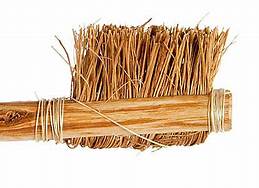
Chew sticks were twigs with frayed ends used to brush the teeth while the other end was used as a toothpick. The earliest chew sticks were discovered in Sumer in southern Mesopotamia in 3500 BC, an Egyptian tomb dating from 3000 BC, and mentioned in Chinese records dating from 1600 BC.


The Indian way of using tooth wood for brushing is presented by the Chinese Monk Yijing (635–713 CE) when he describes the rules for Monks in his book: "Every day in the morning, a monk must chew a piece of tooth wood to brush his teeth and scrape his tongue, and this must be done in the proper way. Only after one has washed one’s hands and mouth may one make salutations. Otherwise both the saluter and the saluted are at fault.


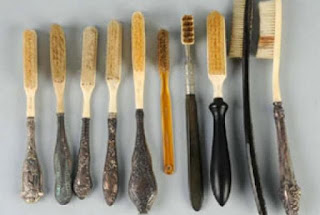
The first bristle toothbrush resembling the modern one was found in China. Used during the Tang Dynasty (619–907), it consisted of hog bristles. The bristles were sourced from hogs living in Siberia and northern China because the colder temperatures provided firmer bristles. They were attached to a handle manufactured from bamboo or bone, forming a toothbrush. In 1223, Japanese Zen master Dōgen Kigen recorded in his Shōbōgenzō that he saw monks in China clean their teeth with brushes made of horsetail hairs attached to an oxbone handle. The bristle toothbrush spread to Europe, brought from China to Europe by travellers.[17] It was adopted in Europe during the 17th century. The earliest identified use of the word toothbrush in English was in the autobiography of Anthony Wood who wrote in 1690 that he had bought a toothbrush from J. Barret. Europeans found the hog bristle toothbrushes imported from China too firm and preferred softer bristle toothbrushes made from horsehair. Mass-produced toothbrushes made with horse or boar bristle continued to be imported to Britain from China until the mid 20th century.


In the UK, William Addis is believed to have produced the first mass-produced toothbrush in 1780. In 1770, he had been jailed for causing a riot. While in prison he decided that using a rag with soot and salt on the teeth was ineffective and could be improved. After saving a small bone from a meal, he drilled small holes into the bone and tied into the bone tufts of bristles that he had obtained from one of the guards, passed the tufts of bristle through the holes in the bone and sealed the holes with glue. After his release, he became wealthy after starting a business manufacturing toothbrushes. He died in 1808, bequeathing the business to his eldest son. It remained within family ownership until 1996. Under the name Wisdom Toothbrushes, the company now manufactures 70 million toothbrushes per year in the UK. By 1840 toothbrushes were being mass-produced in Britain, France, Germany, and Japan. Pig bristles were used for cheaper toothbrushes and badger hair for the more expensive ones.


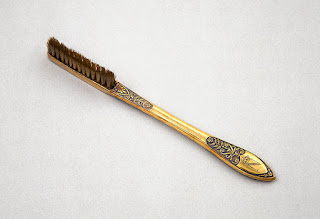
The horsehair toothbrush was said to have been used by Napoleon Bonaparte (1769–1821)
 

If you want to read a lot more, go here:

https://en.wikipedia.org/wiki/Toothbrush


From Mr. Food


Check out our lightened version of the classic appetizer, Spinach and Artichoke Dip. Bet you can't tell the difference!


  • 2 (6-ounce) packages fresh baby spinach
  • 1 tablespoon butter
  • 1 (8-ounce) package 1/3-less-fat cream cheese
  • 1 garlic clove, chopped
  • 1 (14-ounce) can artichoke hearts, drained and chopped
  • 1/2 cup light sour cream
  • 1/2 cup (2 ounces) shredded part-skim mozzarella cheese, divided


  1. In a large microwave-safe bowl, microwave spinach  on HIGH 3 minutes, or until wilted. Drain spinach well, pressing between paper towels, then chop.
     
  2. Preheat oven to 350º.

  3. In a nonstick skillet, melt butter over medium-high heat. Add cream cheese and garlic; cook 3 to 4 minutes, stirring constantly, until cream cheese melts. Fold in spinach, artichokes, sour cream, and 1/4 cup mozzarella cheese; stir until cheese melts.
     
  4. Transfer mixture to a 1-quart shallow baking dish. Sprinkle with remaining mozzarella cheese.
     
  5. Bake 15 minutes or until hot and bubbly. Serve immediately with fresh pita wedges or baked pita chips.


Historically this date....
1917 – A Great Fire in ThessalonikiGreece destroys 32% of the city leaving 70,000 individuals homeless.


1965 – Vietnam WarOperation Starlite begins – United States Marines destroy a Viet Cong stronghold on the Van Tuong peninsula in the first major American ground battle of the war.


1983 – Hurricane Alicia hits the Texas coast, killing 22 people and causing over USD $1 billion in damage (1983 dollars).


And births this date include....
 
 
1904 – Max Factor, Polish-born cosmetics entrepreneur (d. 1996)
https://blogger.googleusercontent.com/img/b/R29vZ2xl/AVvXsEidEQR6l9BmsVGkN5LOkNWtzKHaQCLfg9dG6mvNVFzS0Bosg5atAaESmznMVqYesy8afguQ8hgWpSsSs3dOT3-VCyYBTRw7MxzHXCxVbc8hEoJhqZES2PJIS5pjEtcpzACPp4euUxeu0hxE/s1600/max_factorMA29053621-0021.jpg


1936 – Robert Redford, American actor...
 
https://blogger.googleusercontent.com/img/b/R29vZ2xl/AVvXsEhepec22t6owmqTXXbNKG8j2GF13MSovPT3gUepM7mTvv_7AjYv6IzaqHEJD6RhoNEb966_Twb_oo3JX9xHREF1D58sF7mIi-v-2I3_JLmJySbMBb4o3omEg56g4dClKGYtCsJerOECY91y/s1600/robertMA29053610-0015.jpghttps://blogger.googleusercontent.com/img/b/R29vZ2xl/AVvXsEjiADFMhmyTy_mwJ0awBUEY5Vqp__MzCOP_f1Zu5uKkoodeWO7x5k_w7_WESvjeoVV61YzKAdXjqxcw47oS5whBFuVs7CXr-4CwUcAmX1BihRxLszRFZ7_aHlDM77zdZGw9-lIXWncjzuis/s1600/robert2MA29053610-0016.jpg


1952 – Patrick Swayze, American actor (d. 2009)
https://blogger.googleusercontent.com/img/b/R29vZ2xl/AVvXsEg4x-VE2iIaNugkvAezCaUWcVc0atNLVuTZQLGOjpE9r1wEcMI_lpfizph-w0hSXlWvWYbNj7nvpXgsgDpmR4R9ZFZbrjfZDt7QeZazZiaMirMPyMb-KNy1NicSiLmhPVippjNGD3Amw-id/s1600/patMA29053610-0017.jpghttps://blogger.googleusercontent.com/img/b/R29vZ2xl/AVvXsEjn6C1frWSB3J2zRkqmMOPuR1IcwCud3WPqyd4zXk8n-b19ehqzGNmvIqyAQijpul_TUurBYd3FpVTauxzdjKga0RckascB-YjehI-djsrf2b7jLo6AZeKDPTZ9Meqte2MwaGIEIWahcJK8/s1600/pat2MA29053610-0018.jpg


All I know. Nuff said. Have a good Wednesday. Ciao.
xo Sue Mom Bobo

National Pinot Noir Day on August 18th encourages wine lovers to experience one of the wine world’s most versatile wines.

Since Pinot Noir’s high acidity along with the lower tannins, it complements food nicely. Wineries around the world produce pinot noir using red wine grapes and primarily the Pinot Noir varietal.

The dry wine includes hints of cherry and raspberry, as well as earthy flavors and notes of floral. It’s one of the world’s favorite red wines, too. One Pinot Noir grown and produced in Burgundy, France bears the name of the region. France also produces more Pinot Noir than any other country. However, today the grape is grown all over the world. The soil, climate, and how it is processed all impact the flavors.

HOW TO OBSERVE 

The easiest way to celebrate the day is by having a glass of Pinot Noir. However, don’t stop there.

Pinot Noir FAQ

Q. Should I decant pinot noir?
A. No. You can serve pinot noir from the bottle but chill it slightly.

Q. What kind of glass should I use to serve pinot noir?
A. Serve pinot noir in a red wine glass with a large bowl shape.

Q. How long does an open bottle of pinot noir last?
A. Isn’t an open bottle and empty bottle? If you must re-cork your bottle of pinot noir, it will retain its flavor for 2-3 days.